


 Cart
Cart
 sales@molnova.com


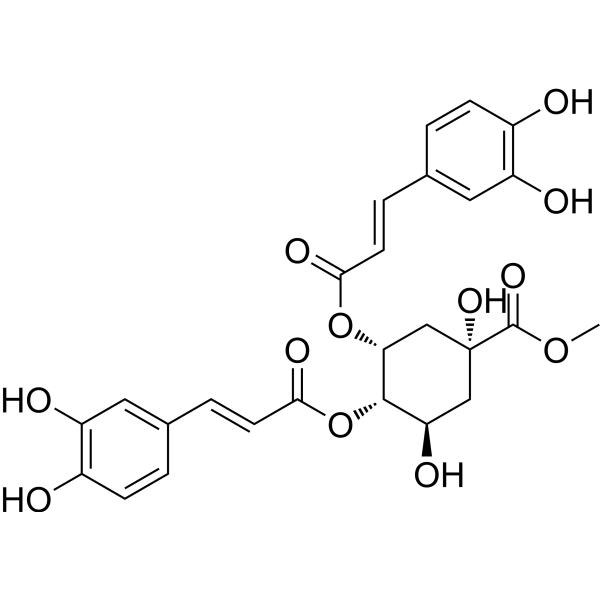
4,5-Di-O-caffeoylquinic acid methyl ester
CAS No. 188742-80-5
4,5-Di-O-caffeoylquinic acid methyl ester( —— )
Catalog No. M31471 CAS No. 188742-80-5
4,5-Di-O-caffeoylquinic acid methyl ester shows high efficiency and low toxicity with antivirus activity against RSV.
Purity : >98% (HPLC)
 COA
Datasheet
HNMR
HPLC
MSDS
Handing Instructions
COA
Datasheet
HNMR
HPLC
MSDS
Handing Instructions
| Size | Price / USD | Stock | Quantity |
| 5MG | 585 | In Stock |


|
| 50MG | Get Quote | In Stock |
|
| 100MG | Get Quote | In Stock |
|
Biological Information
-
Product Name4,5-Di-O-caffeoylquinic acid methyl ester
-
NoteResearch use only, not for human use.
-
Brief Description4,5-Di-O-caffeoylquinic acid methyl ester shows high efficiency and low toxicity with antivirus activity against RSV.
-
Description4,5-Di-O-caffeoylquinic acid methyl ester shows high efficiency and low toxicity with antivirus activity against RSV.
-
In Vitro——
-
In Vivo——
-
Synonyms——
-
PathwayOthers
-
TargetOther Targets
-
Recptor——
-
Research Area——
-
Indication——
Chemical Information
-
CAS Number188742-80-5
-
Formula Weight530.5
-
Molecular FormulaC26H26O12
-
Purity>98% (HPLC)
-
Solubility——
-
SMILES——
-
Chemical Name——
Shipping & Storage Information
-
Storage(-20℃)
-
ShippingWith Ice Pack
-
Stability≥ 2 years
Reference
molnova catalog



related products
-
Tirapazamine
Tirapazamine is a potent cytotoxic agent under hypoxic conditions, can induce apoptosis by inducing breaks in single and double-stranded DNA, as well as chromosomal breaks.
-
Scutellarin methyles...
Scutellarin methylester has the effect of improving sleep, such as prolonging sleep time, increasing the incidence of sleep, shortening sleep latency, which also helps to delay aging process.
-
TT-10
TT-10 (TAZ-K), an activator of YES-associated protein (YAP)-transcriptional enhancer factor domain (TEAD) activity, has potential application in heart disease research, specifically for conditions characterized by loss of cardiomyocytes.
